How to Manage Overtime in the Workplace
Quick Summary
- Excessive overtime is not a demand problem — it is a visibility and policy problem. Organizations without real-time workforce data cannot intervene before overtime accumulates.
- The five core management levers are: clear policies, real-time tracking, demand-aligned scheduling, cross-training, and automated enforcement — each reinforces the others.
- Organizations that pair automated attendance tracking with structured overtime policy see measurable labor cost improvements within 60–90 days.
Overtime is a necessary component of workforce operations. The objective is not to eliminate it entirely, but to ensure it is used strategically and efficiently. Organizations that replace reactive scheduling with data-driven shift management gain a measurable competitive advantage in both labor cost and workforce stability.
Why Overtime Management Is a Strategic Priority
Overtime plays a critical role in maintaining operational continuity. It allows organizations to respond to demand spikes, staffing gaps, and unexpected disruptions. However, when overtime becomes reactive instead of controlled, it directly impacts profitability, compliance, and workforce stability.
- Higher labor costs — Premium pay rates compound quickly across a workforce—often the first sign that scheduling systems are not working.
- Employee burnout — Consistent overwork reduces productivity, increases error rates, and accelerates the turnover cycle that makes overtime worse.
- Rising absenteeism — Burned-out employees take more unplanned absences, which triggers additional overtime to fill the resulting gaps.
- Compliance exposure — Wage and hour violations tied to overtime miscalculation carry significant financial and reputational risk.
Organizations that implement structured workforce management for manufacturing and other labor-intensive environments consistently outperform those relying on manual scheduling. The gap between the two is not effort — it is system design.
The connection between overtime and absenteeism and tardiness is direct: every unplanned absence creates a scheduling gap that overtime is used to fill. Managing both problems with the same system is how high-performing operations break the cycle.
The Root Causes of Excessive Overtime
Most overtime issues are not caused by demand alone. They are driven by operational blind spots and outdated workforce processes that turn a controllable tool into a recurring expense.
- Lack of real-time visibility into attendance and workforce availability
- Manual scheduling that cannot adapt quickly to demand fluctuations
- Over-reliance on specific employees with specialized skills who cannot be substituted
- Poor enforcement of attendance and overtime policies across managers and shifts
- Disconnected systems between scheduling, payroll, and operations that delay decision-making
Without addressing these root causes, overtime becomes structural — a budget line that grows every quarter without a clear path to reduction. The good news: each cause has a direct system-level fix.
5 Proven Strategies to Manage Overtime Effectively
The following strategies address both the policy and operational dimensions of overtime control. Applied together, they shift overtime from a reactive cost to a managed tool.
1. Set Clear Overtime Limits and Policies
Federal law mandates overtime pay beyond 40 hours per week but sets no cap on total hours worked. This puts the responsibility squarely on employers to create enforceable limits before overtime becomes a default mode of operation.
A strong overtime policy should define:
- Weekly, monthly, and annual overtime thresholds by role and department
- Approval workflows for any additional hours beyond scheduled shifts
- Clear consequences for managers who circumvent policy limits
- Documentation standards that keep records audit-ready at all times
Consistency in enforcement is critical. Without it, policies lose credibility and operational control breaks down. The policy automation tools that apply rules uniformly across all managers and locations are significantly more effective than those that rely on individual managers to self-enforce.
2. Track Overtime in Real Time
Manual tracking introduces delays, inaccuracies, and missed intervention windows. By the time a manager reviews a weekly report, the overtime has already been worked and the cost has already been incurred.
- Threshold alerts — Managers receive notifications the moment an employee approaches their overtime limit — before the shift is approved.
- Accurate payroll data — Automated tracking eliminates manual entry errors that create both compliance risk and budget overruns.
- Real-time scheduling adjustments — Supervisors can reassign shifts or bring in available staff before overtime is triggered.
- Reduced administrative load — HR and operations teams spend less time reconciling timesheets and more time on strategic decisions.
Platforms with integrated attendance tracking ensure overtime is monitored continuously rather than reviewed after the cost has been incurred. This single shift — from review to prevention — is where most of the financial impact is realized.
3. Align Scheduling With Demand
Overtime often results from poor demand forecasting. When schedules do not match workload requirements, managers reach for overtime as a fallback. Modern scheduling automation closes this gap by connecting historical demand data with real-time workforce availability.
Demand-aligned scheduling enables:
- Dynamic staffing level adjustments based on real operational data
- Prevention of both overstaffing (unnecessary labor cost) and understaffing (overtime triggers)
- Operational continuity without excess labor expenditure
- Proactive coverage planning before gaps appear on the schedule
This is especially critical in industries that must maintain delivery schedules or operate with tight service windows. In healthcare environments where patient coverage is non-negotiable, demand-aligned scheduling is the difference between controlled overtime and chronic overextension.
4. Cross-Train Your Workforce
When only a few employees can perform critical tasks, overtime becomes structurally unavoidable. Every absence, every resignation, every unexpected demand surge forces overtime on the same small group of specialized workers. Cross-training eliminates single points of failure and distributes workload more effectively.
- Reduced dependency on key individuals — Coverage gaps can be filled by a wider pool, reducing both overtime frequency and employee burnout.
- Improved scheduling flexibility — Managers have more options when building or adjusting schedules to match demand without exceeding labor budgets.
- Lower overtime during absences — When more employees can cover a role, unplanned absences trigger coverage, not automatic overtime.
- Employee development and engagement — Cross-training signals investment in employees, improving retention and reducing the turnover that creates ongoing staffing pressure.
Cross-training is particularly impactful in industries like food and beverage and retail where role flexibility directly determines whether a shift runs on budget. It strengthens operational resilience while supporting long-term workforce development goals.
5. Use Automation to Enforce Overtime Policies
Policies alone do not prevent overtime. Enforcement does. And consistent enforcement at scale requires automation — because manual oversight fails under the complexity of large workforces with varying schedules, roles, and compliance requirements.
- Threshold alerts trigger automatically — When an employee approaches their approved overtime limit, managers are notified before the overage is approved — not after it is worked.
- Scheduling restrictions enforce the policy — Systems can be configured to require approval or prevent scheduling beyond defined thresholds, removing the decision from individual managers.
- Payroll integration ensures accuracy — Automated systems connect time data directly to payroll, eliminating the manual reconciliation errors that create both compliance risk and employee disputes.
- Reports generate automatically — Compliance-ready documentation is produced without HR team intervention, supporting both internal audits and regulatory requirements.
Organizations that automate policy enforcement reduce administrative burden while improving accuracy and accountability. The enforcement happens whether or not a manager is paying close attention — which is precisely the point.
Productivity Pilot is built for exactly this.
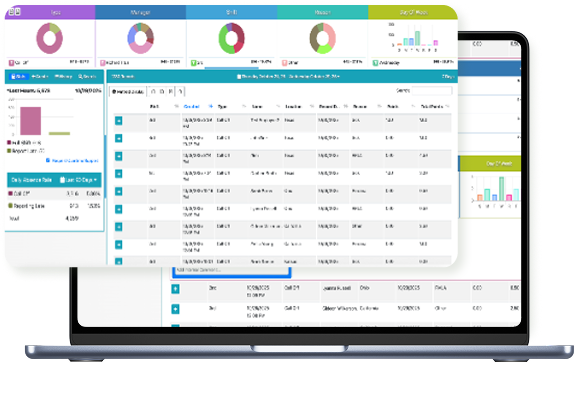
Productivity Pilot gives operations and HR teams a centralized platform for managing attendance, scheduling, and labor costs — with automated overtime alerts, policy-driven scheduling restrictions, and compliance-ready reporting built in. Organizations using Productivity Pilot report up to a 50% reduction in absenteeism, which directly reduces the unplanned overtime that drains labor budgets.
See how Productivity Pilot enforces overtime policy — schedule a demo
Key Metrics to Monitor for Overtime Control
Effective overtime management requires continuous measurement. Strategy without tracking is a guess. The following metrics give operations and HR leaders the signal they need to adjust before costs escalate.
- Total overtime hours per employee — Identifies which individuals are chronically overextended and flags where cross-training or hiring may be needed.
- Overtime as % of total labor cost — The primary budget metric. When this rises quarter over quarter, it signals a systemic scheduling or policy problem.
- Absenteeism rate and overtime correlation — High absence rates almost always drive overtime. Tracking both together reveals the real source of labor cost pressure.
- Schedule adherence and coverage gaps — Gaps in shift coverage are leading indicators of upcoming overtime — monitoring them allows proactive scheduling before overtime is triggered.
These metrics provide actionable insights that allow leaders to adjust strategies in real time. For a deeper look at the relationship between absenteeism and labor costs, see our guide on how to improve employee attendance — reducing absenteeism is consistently the fastest path to reducing overtime dependency.
Conclusion: Overtime Should Be Controlled, Not Eliminated
Overtime is a necessary component of workforce operations in every industry. The objective is not to remove it entirely — it is to ensure it is used strategically, tracked accurately, and enforced consistently.
Organizations that invest in scheduling automation, policy enforcement, and real-time workforce visibility gain a measurable competitive advantage. They reduce labor costs, improve employee satisfaction, and maintain operational continuity — without sacrificing the flexibility that operational demands require. For a broader view of the operational gains available, see our guide on solving common HR problems with workforce automation.
Ready to Take Control of Your Overtime Budget?
Productivity Pilot gives operations and HR teams the real-time visibility, policy automation, and scheduling intelligence to eliminate unplanned overtime and reduce labor costs — without sacrificing coverage.
Schedule a 20-minute demo · See the Productivity Pilot Difference