Reducing Administrative Burden to Improve Workforce Efficiency
Administrative Work Should Support Your Business, Not Slow It Down
Administrative work keeps every organization running. Employee records must be maintained, reports generated, approvals processed, and compliance documentation organized. These tasks are necessary, but when they become overly manual, they begin taking valuable time away from work that drives the business forward.
As organizations grow, administrative complexity grows with them. Additional employees, locations, policies, and reporting requirements often lead to more spreadsheets, disconnected systems, and repetitive manual processes. The result is an increasing administrative burden that quietly consumes time and labor costs across HR, operations, payroll, and management.
Consider an organization with 20 supervisors and HR professionals who each spend one extra hour per day on repetitive administrative work. At an average fully burdened labor cost of $45 per hour, that’s more than $230,000 every year spent on tasks that could often be simplified or automated.
Administrative work is necessary. Unnecessary administrative work is expensive.
Why Administrative Burden Continues to Grow
Administrative work rarely becomes inefficient overnight. Most organizations gradually add new processes to solve immediate problems, a spreadsheet for reporting, another approval step, or a separate software platform for a specific department.
Over time, these small changes create fragmented workflows where employees spend more time maintaining information than using it.
Common contributors include:
- Disconnected software platforms
- Duplicate data entry
- Manual approval processes
- Spreadsheet-based reporting
- Increasing compliance requirements
- Growing workforce complexity
Even small inefficiencies become expensive when repeated every day. If 25 supervisors spend just 30 extra minutes on manual administrative tasks, the organization loses more than 3,200 labor hours annually, representing roughly $146,000 in labor costs.
The Hidden Cost of Administrative Work
The true cost of administrative work extends far beyond payroll.
Managers spend less time leading employees.
HR spends more time processing paperwork than supporting the workforce.
Leadership waits longer for reports because information must be gathered from multiple systems.
Payroll teams spend additional time correcting preventable errors.
These inefficiencies compound quickly. If monthly workforce reporting requires five unnecessary hours because information must be manually compiled, and the organization prepares ten similar reports each month, that’s 600 labor hours annually. At $45 per hour, manual reporting alone costs approximately $27,000 each year.
When administrative work consumes valuable employee time, productivity suffers across the organization.
Simplifying Administrative Work
Reducing administrative burden isn’t about eliminating important processes, it’s about eliminating unnecessary ones.
Organizations can significantly improve efficiency by centralizing workforce information, standardizing workflows, and reducing repetitive manual tasks.
The greatest improvements typically come from:
- Centralized workforce records
- Automated workflows
- Standardized documentation
- Real-time reporting
- Improved visibility across departments
For a team of 10 HR professionals, saving just 20 minutes per employee each workday recovers nearly 870 labor hours annually, the equivalent of almost $40,000 in productive time.
How ProductivityPilot Helps
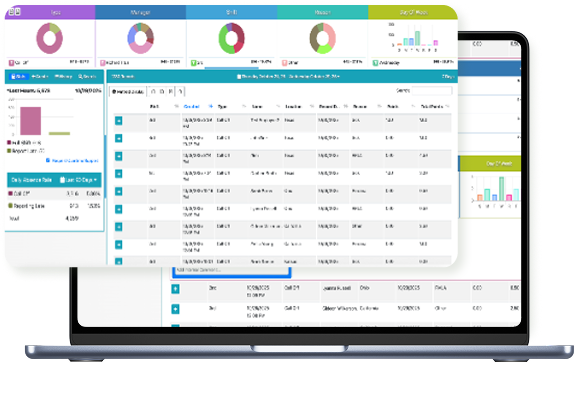
ProductivityPilot centralizes workforce administration into a single platform, helping organizations reduce administrative burden without sacrificing visibility or control.
Instead of managing information across multiple spreadsheets, emails, and disconnected systems, organizations can simplify documentation, automate workflows, improve reporting, and standardize administrative processes.
With ProductivityPilot, organizations can:
- Reduce manual administrative work
- Improve workforce visibility
- Simplify reporting
- Strengthen compliance
- Standardize documentation
- Give managers and HR teams more time to focus on employees and operations
Administrative work should support your workforce, not become a barrier to productivity.
A Smarter Approach to Administrative Work
Administrative work will always be part of running a successful organization, but excessive administrative work doesn’t have to be.
Organizations that reduce manual processes, centralize workforce information, and automate repetitive tasks spend less time on administration and more time improving operations, supporting employees, and driving business performance.
ProductivityPilot helps organizations simplify workforce administration so HR teams, supervisors, and operational leaders can focus on the work that matters most.