How Much Time Is Your Team Wasting Managing Absences?
An employee calls off before a shift. On the surface, it looks like one simple workforce event: one employee will not be at work.
Behind the scenes, that single absence can create a surprising amount of administrative work.
Someone has to receive the call-off, document it, notify the appropriate supervisor, review the employee’s attendance history, apply the attendance policy, update records, communicate the staffing change, and potentially begin looking for coverage. When those processes are manual, one absence can pull several people away from the work they were actually hired to do.
For organizations managing hundreds or thousands of hourly employees, the larger productivity problem isn’t only the employee who is absent. It’s also the time everyone else spends managing that absence.
One Call-Off Can Create Work Across the Organization
Unexpected absences rarely affect only one person or department.
A supervisor may receive the initial call and document what happened. HR may need to review the employee’s attendance status and determine whether the absence affects points or corrective action. Operations may need to evaluate the staffing impact. Someone may need to contact employees for coverage or adjust the schedule.
Depending on the organization, a typical absence process can involve tasks such as:
- Receiving and documenting the employee’s report-off
- Notifying supervisors, HR, or operations
- Reviewing attendance history
- Applying attendance policies and points
- Updating spreadsheets or separate systems
- Managing supporting documentation
- Communicating staffing changes
- Coordinating backfill when necessary
None of these tasks are inherently unnecessary. The problem is how much human involvement is required to complete them.
When employees have to manually move information from one step to the next, absence administration becomes a recurring drain on productivity.
The Administrative Cost Is Easy to Miss
Absence-related administrative work often doesn’t appear as a clear line item on a financial statement. It is distributed across the workdays of supervisors, HR professionals, operations leaders, and other employees.
That makes the true impact easy to underestimate.
Consider a hypothetical operation experiencing 15 unexpected absences per day. If each absence requires only 20 minutes of combined administrative work across reporting, documentation, notifications, policy review, and record updates, the organization is spending approximately five administrative hours every day managing absences.
Across 260 operating days, that becomes:
15 absences × 20 minutes = 5 administrative hours per day
5 hours × 260 days = 1,300 administrative hours per year
If the blended labor cost of the employees performing that work is $35 per hour:
1,300 hours × $35 = $45,500 in annual administrative labor
And that’s based on only 20 minutes per absence.
If the process involves multiple calls, policy research, documentation issues, follow-ups, or coverage coordination, the administrative burden can grow quickly.
These figures are illustrative. Actual administrative time and labor costs vary by organization, process complexity, wages, absence volume, and staffing structure.
Manual Processes Multiply the Problem
The biggest productivity drain often isn’t any single task. It’s the number of handoffs required to complete the process.
Imagine a supervisor receives an employee call-off and writes down the information. The supervisor then contacts another manager and sends information to HR. HR reviews the employee’s attendance history and updates a spreadsheet. Someone determines how the attendance policy applies. Another person updates the workforce system. Operations begin addressing the staffing issue.
The absence information may be correct at every step, but employees are spending time transferring, reviewing, interpreting, and re-entering it.
Multiply that process across multiple shifts, departments, facilities, and thousands of annual absences, and small administrative tasks become a significant productivity issue.
The problem is not that the work doesn’t need to happen.
The problem is that people are doing work that can be automated.
Supervisors Become Absence Administrators
Frontline supervisors are particularly affected by inefficient absence processes because they sit at the intersection of employees and operations.
Their primary responsibility may be managing production, quality, safety, staffing, patient care, distribution, or another critical operational function. Yet every unexpected absence can create another administrative workflow that demands their attention.
A supervisor who begins a shift handling call-offs, checking attendance records, communicating with HR, updating documentation, and contacting employees for coverage isn’t spending that time managing the operation.
Even small interruptions matter when they happen repeatedly.
If 20 supervisors each spend an average of 30 minutes per day handling absence-related administrative tasks, that represents 10 hours of supervisory time every day.
Across 260 operating days:
10 hours × 260 days = 2,600 supervisory hours per year
At an illustrative loaded labor cost of $45 per hour, that would represent:
2,600 hours × $45 = $117,000 in supervisory labor annually
Again, the specific number will vary. The larger point is that administrative time has a cost even when an organization isn’t writing a separate check for it.
HR Feels the Same Administrative Burden
Supervisors aren’t the only employees affected.
HR teams can spend significant time reviewing attendance records, answering policy questions, checking documentation, tracking occurrences, researching employee histories, correcting inconsistent records, and communicating with managers.
When attendance policies are administered manually, even straightforward questions can create additional work.
Does this absence receive a point? Has the employee reached a threshold? Was the previous occurrence documented correctly? Does an exception apply? Has the appropriate action already occurred?
If answering those questions requires searching through spreadsheets, emails, notes, or multiple systems, administrative time increases further.
The issue becomes especially significant at scale. A process that feels manageable with 50 employees can become substantially more difficult when the same HR team supports hundreds or thousands of hourly workers.
Manual Policy Administration Creates Another Layer of Work
Attendance policies are necessary, but administering them can become one of the most repetitive parts of absence management.
Every occurrence may require the organization to determine how the policy applies based on the employee’s history and the circumstances of the absence. Managers may also need to track thresholds and determine when an employee has reached the next step in the organization’s attendance process.
When those decisions depend on manual review, the organization isn’t only spending time administering the policy. It is repeatedly spending time answering questions that can often be determined through predefined rules.
This creates an opportunity for automation.
Instead of asking supervisors or HR to manually calculate the correct outcome every time an absence occurs, the policy itself can become part of the workflow.
The Productivity Problem Extends Beyond Labor Cost
Administrative labor is only one part of the impact.
Every hour spent processing absences is an hour that isn’t being spent on higher-value work.
Supervisors could be managing employees, monitoring production, addressing safety concerns, improving performance, or solving operational problems. HR professionals could be focused on recruiting, retention, employee development, workforce strategy, or employee relations.
This is the opportunity cost of manual absence administration.
The organization may still complete every necessary absence-related task, but it does so by consuming time from employees whose attention could be directed elsewhere.
That is why improving absence administration isn’t simply about making HR more efficient. It is about returning productive time to the organization.
ProductivityPilot Automates the Work Around the Absence
Reducing absence administration begins by removing unnecessary manual steps from the process.
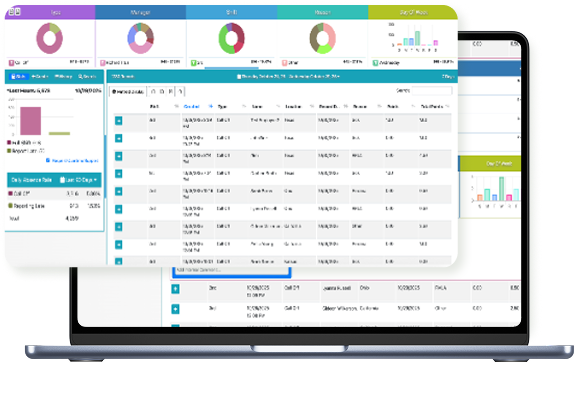
ProductivityPilot centralizes absence-related workflows so information can move through the organization without requiring employees to repeatedly receive, relay, interpret, and re-enter it.
The process begins with centralized employee report-offs through the Attendance Hotline. Once the absence is captured, real-time notifications can provide the appropriate supervisors and stakeholders with visibility without relying on manual communication.
Policy Automation can then help apply predefined attendance rules and point structures consistently. Relevant information and documentation can remain centralized rather than being distributed across spreadsheets, inboxes, notes, and separate processes.
The objective is not to eliminate necessary oversight. It is to eliminate repetitive administrative work surrounding that oversight.
Turn Attendance Policies Into Automated Workflows
Policy Automation is especially important because it targets one of the most repetitive components of absence administration.
Instead of requiring someone to review the employee’s attendance history and manually determine the appropriate policy outcome after every occurrence, organizations can configure rules around their attendance policies.
That allows more of the process to happen systematically.
For example, an absence can be recorded, the employee’s attendance information can be updated, the appropriate policy rules can be applied, and relevant stakeholders can receive the information they need without requiring the same series of manual checks and communications every time.
For organizations processing large volumes of attendance events, eliminating even a few minutes of administrative work per event can add up to substantial time returned to the workforce.
Centralization Eliminates the Search for Information
Automation becomes significantly less valuable if employees still have to search multiple places for the information they need.
Absence information stored in one location, attendance records in another, documentation in an email inbox, and manager notes in a spreadsheet create additional administrative work even when each individual system functions correctly.
ProductivityPilot centralizes absence-related information and documentation so managers and HR teams have a clearer view of the process.
Instead of spending time locating the information necessary to make a decision, employees can spend more time acting on it.
That distinction matters because productivity isn’t only lost while employees enter data. It is also lost while they search for it.
From Manual Administration to Automated Execution
The difference between a traditional manual process and an automated absence workflow becomes clear when looking at what employees actually have to do.
In a heavily manual environment, a call-off can trigger phone calls, emails, spreadsheet updates, policy reviews, documentation searches, system updates, and follow-ups.
With ProductivityPilot, the goal is to create a more connected process in which the initial absence report triggers the appropriate workflows.
That means fewer manual handoffs, less repetitive data entry, faster access to absence information, more consistent policy administration, and less time spent coordinating routine processes.
The result is not simply faster absence administration.
It is productive time returned to supervisors, HR teams, and operations.
What Could Your Team Do With the Time Back?
The business case for administrative automation becomes stronger when organizations stop viewing time savings as an abstract efficiency metric.
Consider the earlier hypothetical example of 1,300 administrative hours spent managing absences annually.
Reducing that administrative burden by 50% would return approximately 650 working hours per year to the organization.
At the illustrative $35 hourly labor cost, that represents $22,750 worth of employee time redirected away from absence administration.
But the more important question is what happens during those 650 hours instead.
Supervisors can spend more time on the floor. HR teams can focus on employees rather than spreadsheets. Operations leaders can address production and staffing issues rather than administrative handoffs.
Automation doesn’t create more hours in the day.
It allows organizations to stop spending existing hours on work that technology can handle.
Give Your Team Their Time Back
Absence administration will always require some level of oversight. It should not require supervisors and HR teams to spend hours every week performing repetitive tasks that can be automated.
When every call-off creates phone calls, policy checks, documentation work, spreadsheet updates, notifications, and manual follow-ups, the organization isn’t only dealing with absenteeism. It is losing additional productivity managing absenteeism.
ProductivityPilot helps automate the work surrounding employee absences so supervisors can supervise, HR can focus on people, and operations can focus on keeping the business moving..
The absence already costs productive time. Managing it shouldn’t cost even more.