How to Write Up an Employee for Excessive Absences
A manager-grade, legally defensible process for documenting attendance issues
Automate documentation and enforcement
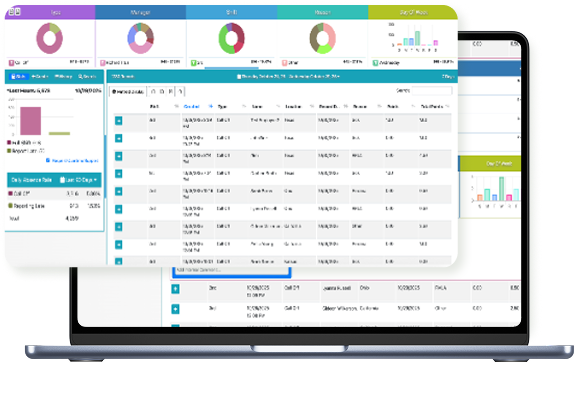
Productivity Pilot centralizes attendance data, automates policy enforcement, and creates defensible records that support coaching, performance management, and compliance reviews. See how policy automation eliminates manual tracking errors.
Schedule a 20-minute demo
Excessive absenteeism is not a morale issue. It’s an operational risk. Left unmanaged, it erodes productivity, increases overtime costs, and exposes the organization to compliance challenges. A write-up is not punitive theater; it is a formal performance intervention.
Step 1: Confirm the Facts Before You Act
Before documentation begins, validate the data. Emotional reactions create liability.
- Pull attendance records from your timekeeping or workforce system
- Confirm the absences exceed your documented policy thresholds
- Distinguish between excused, unexcused, protected, and unpaid leave
- Verify consistency with how similar cases have been handled
If the data isn’t clean, stop. Fix the inputs before escalating. Modern attendance tracking systems ensure your records are accurate and audit-ready.
Step 2: Cross-Check Legal and Policy Constraints
Absenteeism often intersects with protected leave. Missteps here are costly.
Confirm whether absences fall under:
- FMLA (Family and Medical Leave Act)
- ADA accommodations
- State or local sick leave laws
- Military or jury duty protections
- Union or collective bargaining agreements
If any protected category applies, do not proceed with disciplinary language. Pivot to accommodation or HR review. Learn more about FMLA attendance policy compliance.
Step 3: Use Objective, Policy-Led Language
Your write-up must be factual, not interpretive. Avoid intent, emotion, or character judgments.
Include only:
- Dates of absences
- Policy references
- Prior coaching or warnings
- Measurable expectations moving forward
Avoid:
- ✗ “Lack of commitment”
- ✗ “Poor attitude”
- ✗ “Unreliable behavior”
- ✗ Any inference about personal circumstances
This document should stand up in arbitration or litigation without explanation.
Step 4: Structure the Write-Up Correctly
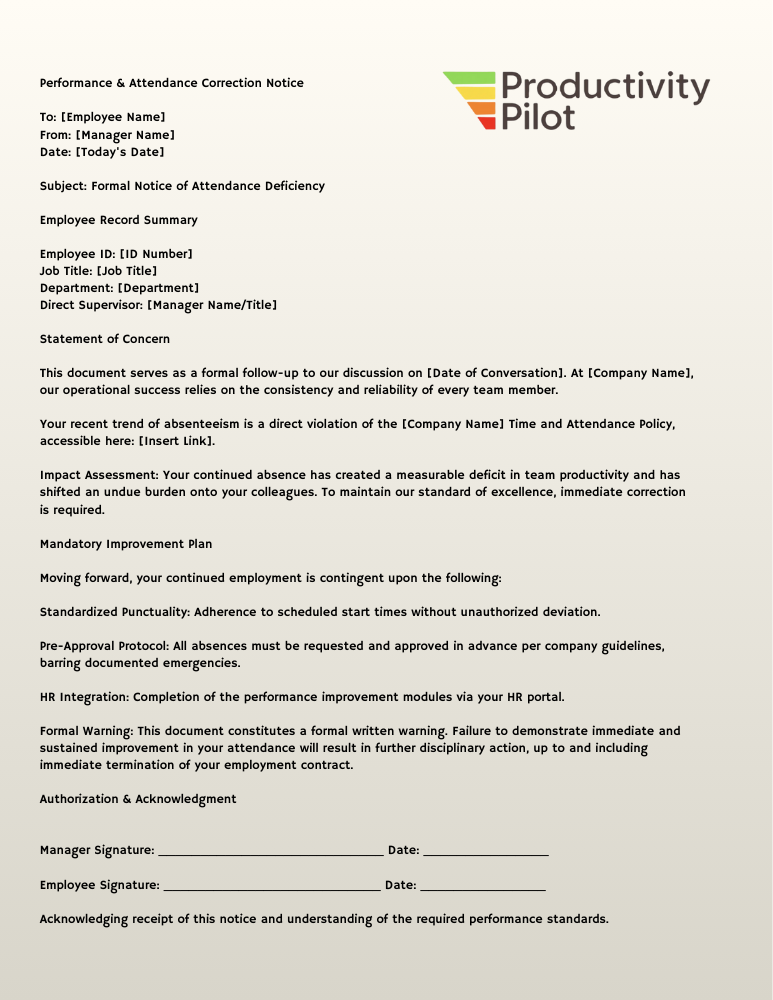
Use a standardized structure to ensure consistency and defensibility.
1. Issue Summary
State the problem clearly and briefly.
Example: “This document addresses attendance issues that exceed company policy limits.”
2. Policy Reference
Cite the exact policy language being violated. Quote it if possible.
3. Attendance Record
List dates and classification of absences. No commentary.
4. Prior Communication
Reference verbal warnings, coaching sessions, or earlier documentation with dates. If a formal warning letter for excessive absenteeism was issued previously, cite it here.
5. Performance Expectations
Define what compliance looks like going forward. Be specific and measurable.
6. Consequences
Outline next steps if improvement does not occur. Keep language neutral and progressive.
7. Acknowledgment
Include a signature line confirming receipt, not agreement.
Step 5: Deliver the Write-Up Professionally
The delivery matters as much as the document.
- Hold the conversation privately
- Stick to the facts
- Allow the employee to respond
- Do not negotiate policy in the meeting
- Document the discussion outcome
The objective is clarity and correction, not confrontation. For guidance on having these conversations, see our article on talking to employees about excessive absences.
Step 6: Monitor and Follow Through
A write-up without follow-through is operational noise.
- Track attendance during the improvement window
- Apply standards consistently
- Escalate or close the issue based on documented outcomes
Inconsistent enforcement undermines credibility and creates risk. With automated point tracking, enforcement becomes consistent and defensible across your entire workforce.
Sample Language (Policy-Neutral)
“This written warning is being issued due to excessive absences that exceed the limits outlined in the company attendance policy. Between [date] and [date], you were absent on [X] occasions, exceeding the allowable threshold of [policy standard].
You are expected to maintain attendance in compliance with company policy moving forward. Failure to do so may result in further disciplinary action, up to and including termination.”
Executive Reality Check
Absenteeism is rarely solved by documentation alone. Organizations that rely solely on write-ups are treating symptoms, not systems. Sustainable reduction comes from visibility, early intervention, and consistent enforcement.
If absenteeism is recurring across teams, the issue is structural, not individual.
Productivity Pilot helps organizations move from reactive documentation to proactive prevention, reducing absenteeism by up to 50% across manufacturing, healthcare, and logistics operations.
Schedule Your Demo