8 Ways HR Can Positively Impact the Bottom Line
How HR leaders influence revenue, cost control, and risk mitigation through workforce systems and policy
Unplanned absences are not an HR inconvenience. They are an operational risk that directly impacts productivity, compliance, and cost control.
Unplanned absences are not an HR inconvenience. They are an operational risk that directly impacts productivity, compliance, and cost control. Leaders who treat absenteeism as a workforce management signal, not a disciplinary afterthought, consistently outperform peers on coverage, morale, and continuity.
Why Absence Management Fails in Most Organizations
Most organizations rely on reactive processes. Call-ins, voicemail chains, paper logs, and spreadsheet tracking delay visibility until shifts are already compromised. By the time leadership becomes aware, overtime costs rise, compliance risk increases, and frontline managers are forced into last-minute decisions.
Effective absence management requires structure, consistency, and real-time visibility across the hourly workforce.
1. Set Clear, Documented Attendance Expectations
Absence management begins with policy clarity. Employees should understand how and when absences must be reported, what qualifies as excused or unexcused time off, and how attendance patterns are evaluated over time.
- Define call-in and notification requirements
- Document attendance thresholds and escalation steps
- Apply policies consistently across teams
Consistency protects both the organization and the employee while reducing subjective enforcement. Learn how policy automation ensures 100% consistent policy application.
2. Standardize the Absence Reporting Process
When employees report absences through multiple channels, data quality suffers. Standardized reporting ensures every absence is captured, timestamped, and visible to decision-makers.
For hourly teams, text-based reporting has proven to be the most reliable channel because it meets employees where they already communicate. Our multi-channel attendance tracking supports phone, text, app, and web reporting in over 150 languages.
3. Track Patterns, Not Isolated Incidents
One missed shift rarely creates a systemic problem. Repeated absences, specific days, or recurring departments do. Organizations that track trends instead of individual events gain early warning signals before coverage gaps occur.
- Identify high-risk shifts and time periods
- Detect chronic absenteeism early
- Separate one-off issues from operational patterns
This is where workforce management technology becomes a strategic advantage.
4. Equip Managers With Real-Time Visibility
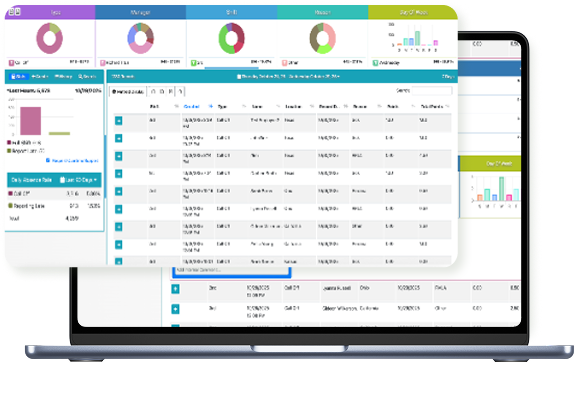
Frontline managers are often the first to feel the impact of absences and the last to receive actionable data. Giving them real-time visibility into attendance status reduces administrative burden and accelerates response time.
This shift moves managers from reactive firefighting to proactive coverage planning. See how workforce and shift management provides early warning signals for staffing shortages.
5. Address Absences Before They Become a Compliance Risk
Attendance mismanagement increases exposure to payroll errors, union disputes, and inconsistent disciplinary actions. Documented processes and auditable records protect organizations while ensuring fair treatment of employees.
When absence data is centralized and time-stamped, compliance becomes defensible instead of fragile.
Industries Where Absence Management Is Mission-Critical
Absenteeism has an outsized impact in environments with tight labor margins and regulatory pressure.
- Workforce management for manufacturing (also see: reducing manufacturing turnover)
- Maintain delivery schedules
- Patient coverage and compliance
- Optimize budgets and coverage
From Absence Tracking to Workforce Control
Managing employee absences is not about enforcement. It is about protecting operational capacity before disruptions occur. Organizations that implement standardized reporting, real-time visibility, and pattern analysis consistently reduce absenteeism by up to 50%.
The result is fewer shift failures, lower overtime costs, and higher workforce reliability.
Ready to see how real-time absence management works in practice?
See a Live Walkthrough